
A 4-Week Weight Loss Workout Plan for Busy Professionals
Build a repeatable training routine with efficient full-body strength sessions, short cardio, daily movement and realistic progression—without living in the gym.

A demanding job can make exercise feel like another appointment you do not have time to keep. The solution is not an extreme routine. It is a weight loss workout plan built around short, repeatable sessions and flexible options for unpredictable weeks.
This guide uses full-body strength training, brisk walking or other moderate cardio, and everyday movement. The objective is to improve fitness, preserve or build strength, and increase total activity while your nutrition supports a sustainable calorie deficit. Exercise helps, but it cannot reliably compensate for an eating pattern that consistently provides more energy than you use.
How a Weight Loss Workout Plan Supports Progress
Weight loss occurs when energy intake remains lower than energy expenditure over time. Physical activity can increase energy use, improve health and help with weight maintenance, while strength training supports muscle and physical function. The National Institute of Diabetes and Digestive and Kidney Diseases recommends combining a healthy eating pattern with regular physical activity for losing or maintaining weight.
A strong weight loss workout plan therefore does more than burn calories during one session. It improves your ability to train consistently, creates measurable performance goals and helps make movement part of your normal week. For busy professionals, that means prioritizing exercises that train several muscle groups and using cardio that is easy to schedule.
The CDC recommends that adults work toward at least 150 minutes of moderate-intensity aerobic activity each week, or an equivalent amount of vigorous activity, plus muscle-strengthening activity on at least two days. You may build toward that level gradually. Some activity is better than none, and shorter blocks can contribute to the weekly total.
A Realistic Weekly Structure for Busy Professionals
This weight loss workout plan uses three possible strength days and two dedicated cardio days. Beginners can start with two strength sessions during week one and add the third when recovery is good. Each main session lasts about 25 to 35 minutes.
| Day | Primary session | Minimum option |
|---|---|---|
| Monday | Full-body strength A | One set of each exercise |
| Tuesday | 20–30 minutes moderate cardio | Three 7-minute brisk walks |
| Wednesday | Full-body strength B | 15-minute express circuit |
| Thursday | Walking and mobility | Two active 5-minute breaks |
| Friday | Full-body strength C | Repeat strength A for 20 minutes |
| Saturday | 30–45 minutes easy or moderate activity | Leisure walk or bike ride |
| Sunday | Rest and weekly planning | Gentle mobility if helpful |
Your calendar does not need to match this example exactly. Move sessions to the days you can protect most reliably. Avoid placing all three strength workouts on consecutive days when possible, especially while you are learning the movements.
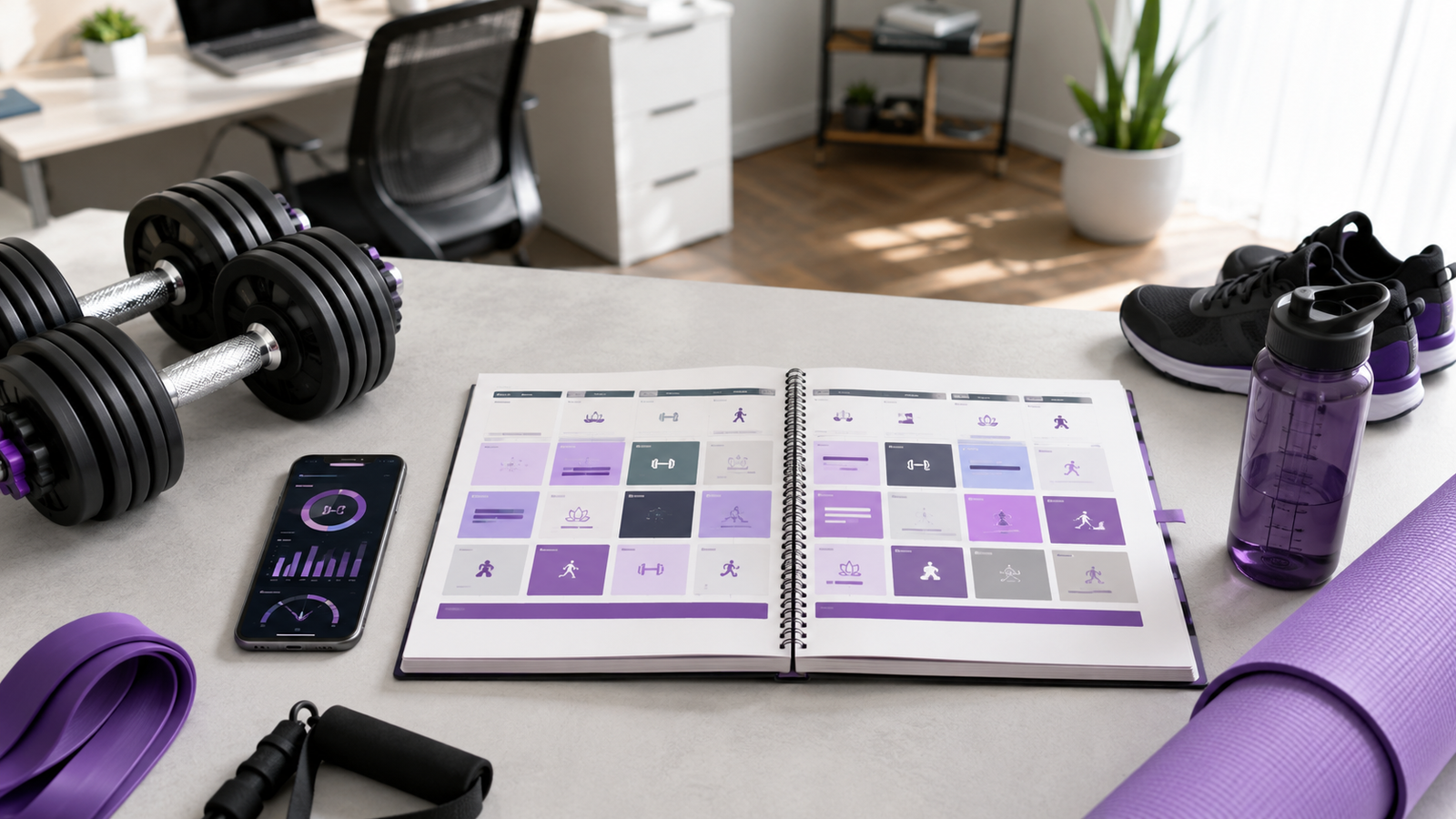
The 4-Week Weight Loss Workout Plan
Week 1: Establish the Minimum Routine
Complete two full-body strength sessions, two 20-minute brisk walks and at least one longer easy walk. Use light to moderate resistance and stop each strength set while you could still complete approximately two or three good repetitions. The goal is to finish the week feeling capable of repeating it.
Week 2: Add Training Volume
Add a third strength session or increase the first two sessions from two sets to three sets on selected exercises. Accumulate roughly 100 to 130 minutes of moderate aerobic activity across the week through walking, cycling or another suitable option.
Week 3: Progress One Variable
Keep the weekly structure stable and progress only one main variable. You might add a small amount of weight, complete one or two extra repetitions, improve exercise control, or add five minutes to one cardio session. A useful weight loss workout plan progresses without turning every workout into a maximum-effort test.
Week 4: Consolidate and Review
Repeat the schedule without forcing another increase. Review your consistency, recovery and technique. When you completed most sessions comfortably, begin the next four-week block with a modest progression. When fatigue was high, reduce a set or use lighter resistance before building again.
Three Efficient 30-Minute Strength Workouts
Warm up for three to five minutes with easy movement and controlled practice repetitions. Choose a resistance that lets you use stable technique. Most beginners can start with two sets of 8 to 12 repetitions for each movement and rest for 45 to 90 seconds as needed.
Workout A: Squat, Push, Pull and Core
- Goblet squat, bodyweight box squat or sit-to-stand
- Incline push-up or dumbbell floor press
- One-arm dumbbell row or resistance-band row
- Glute bridge or light Romanian deadlift
- Dead bug or short front plank
Workout B: Single-Leg, Overhead and Hip Strength
- Supported split squat or reverse lunge
- Seated dumbbell overhead press
- Resistance-band pulldown or another supported pulling exercise
- Hip thrust, glute bridge or kettlebell deadlift
- Side plank from knees or suitcase carry
Workout C: Full-Body Circuit
- Step-up or squat variation
- Dumbbell chest press or incline push-up
- Dumbbell or band row
- Dumbbell Romanian deadlift
- Farmer carry, marching carry or controlled mountain climber
For Workout C, complete the exercises as a controlled circuit if your technique remains steady. Rest whenever needed. The purpose is efficient training, not racing through poor repetitions. People training at home can use the equipment ideas in our guide to home gym equipment for beginners.

Cardio and Daily Movement That Fit a Workday
Cardio does not have to mean long runs or intense intervals. Moderate-intensity activity is often the most practical choice because it can be repeated frequently. A simple talk test is useful: during moderate activity, you can speak in sentences but would find singing difficult.
Start with walking when you are unsure. It requires little preparation and can be split across the day. Two 10-minute walks and one 15-minute walk still create 35 minutes of activity. Walking before work, after lunch or immediately after shutting down your computer can reduce the friction of scheduling a separate gym visit.
Use high-intensity intervals only when your fitness, health and exercise experience make them appropriate. They are optional, not essential. An effective weight loss workout plan should improve your week rather than leave you too exhausted to work, sleep or complete the next session.
- Take phone calls while walking when the conversation allows it.
- Use stairs for a few floors instead of waiting for a lift.
- Schedule a five-minute movement break after long blocks of focused work.
- Park farther away or leave public transport one stop earlier when practical and safe.
- Use a short evening walk to separate work time from home time.
Nutrition, Sleep and Recovery Still Matter
Training supports weight management, but food intake has a major influence on whether body weight decreases. You do not need a perfect diet. You need a repeatable eating structure that helps you consume an appropriate amount of energy while meeting nutritional needs.
Build meals around a protein source, vegetables or fruit, a suitable portion of carbohydrate, and foods that provide healthy fats. Prepare simple default meals for demanding days so that every decision does not depend on willpower. Avoid treating exercise as permission to eat without awareness, and do not respond to one high-calorie meal with punishment workouts.
The CDC notes that healthy weight loss includes healthy eating, regular activity, enough sleep and stress management. Gradual, steady loss—often described as about one to two pounds per week—is more likely to be maintained than rapid loss, although an appropriate rate differs between individuals. Read the CDC’s official steps for losing weight for additional guidance.
Sleep also affects your ability to train, make food decisions and manage appetite. When your schedule is overloaded, preserve the routine by reducing workout volume rather than repeatedly sacrificing sleep.
How to Track the Plan Without Obsessing
Track behaviors first. Record strength sessions, cardio minutes, walking, sleep and one nutrition behavior you are actively improving. These measures tell you whether the plan is being followed before you judge the result.
Body weight can fluctuate because of hydration, sodium, carbohydrate intake, digestion and the menstrual cycle. When weighing is appropriate for you, use similar conditions and focus on a multi-week trend rather than one reading. Waist measurements, clothing fit, progress photos, energy and strength can provide additional context.
Review the data every two to four weeks. When weight and measurements are not changing, first check consistency. When the plan has been followed closely, adjust one factor modestly—such as meal portions, walking time or cardio volume—rather than changing everything at once.
What to Do During an Extremely Busy Week
A missed session does not ruin your weight loss workout plan. The bigger problem is allowing one missed day to become several inactive weeks. Use a minimum version that keeps the habit alive.
| Available time | Minimum effective action |
|---|---|
| 30 minutes | Complete the planned full-body workout. |
| 20 minutes | Perform four main exercises for two or three sets. |
| 10 minutes | Alternate one lower-body and one upper-body exercise, then walk. |
| 5 minutes | Complete mobility and a brisk movement break, then reschedule. |
Do not double the next workout to “make up” for a missed session. Resume the schedule and protect the next realistic opportunity. If accountability and adjustments are difficult to manage alone, our guide explains how to choose an online fitness coach who fits your schedule and expectations.
Your Weight Loss Workout Plan Checklist
- Schedule two or three full-body strength sessions each week.
- Build toward at least 150 weekly minutes of moderate aerobic activity.
- Use short walks and movement breaks to increase daily activity.
- Progress one training variable at a time.
- Pair exercise with a realistic nutrition structure.
- Review trends every two to four weeks instead of reacting daily.
- Use minimum workouts during busy periods rather than abandoning the plan.
Frequently Asked Questions
How many days a week should I work out for weight loss?
A practical starting point is two or three full-body strength sessions plus two or more moderate cardio or brisk-walking sessions each week. Your fitness, recovery, health and schedule should determine the exact amount.
Are 30-minute workouts enough for weight loss?
They can be. Consistent 30-minute sessions are more useful than longer workouts you rarely complete. Combine them with regular movement, suitable nutrition, sleep and gradual progression.
Should I do cardio or strength training first?
When both are in the same session and maintaining strength is important, perform strength training first and finish with short cardio. Separate sessions are also effective when they fit your week better.
How quickly should I expect to lose weight?
Progress varies. The CDC describes gradual, steady weight loss of about one to two pounds per week as more sustainable for many people, but your appropriate rate may differ according to your starting point and health.
What if I miss a workout because of work?
Resume at the next practical opportunity rather than doubling the next session. A short workout or brisk walk can protect consistency during an unusually demanding week.
Need a Plan Built Around Your Schedule?
MedFitCoach can help you organize training, progression and accountability around your experience, equipment and available time.
View MedFitCoach PackagesMedical disclaimer: This article is educational and does not diagnose, treat or replace individualized medical advice. Stop exercising and seek appropriate medical help if you experience concerning symptoms.